
Carolyn Parkinson
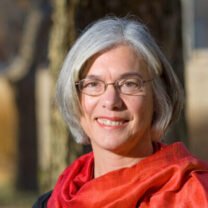
Dorothy Munkenbeck Fragaszy
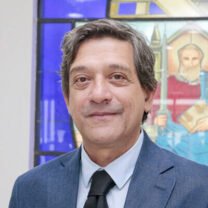
Eduardo Góes Neves
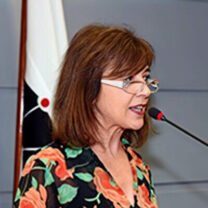
Emília Pietrafesa de Godoi

Emmanuel de Almeida Burdmann
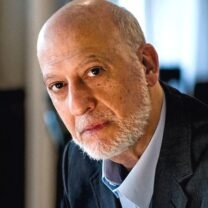
Esper A. Cavalheiro
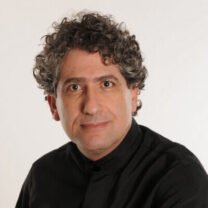
Gil Jardim
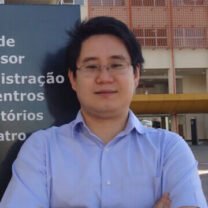
João Ricardo Sato

Marcia Thereza Cavalcanti Couto
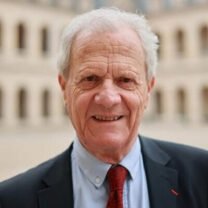
Robert Alain Frank
Meet the Researchers
participating in the 2025 School
Engaging knowledge,
groundbreaking research
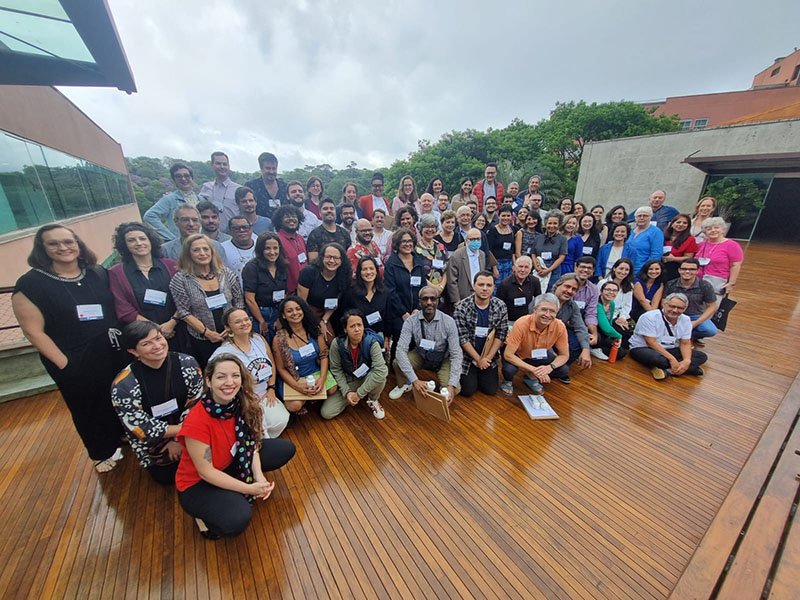
Meet the ten top researchers – from Brazil, France and the USA – that we´ll meet in the School 2025.
The FAPESP Interdisciplinary School is a unique opportunity to engage with leading scientists from Brazil and abroad in discussions about the most pressing and relevant topics on Humanities, Social Sciences and Arts. Moreover, it allows students to present their own work to a selected audience, as “short pitch” presentations and posters.

Speakers & Talks

Carolyn Parkinson
Brain Research Institute - University of California, Los Angeles (UCLA)
1. Participation in the School
2. Bio
Carolyn Parkinson is an Associate Professor in the Department of Psychology, faculty at the Brain Research Institute, and the Wendell Jeffrey and Bernice Wenzel Term Endowed Chair in Cognitive Neuroscience at the University of California, Los Angeles (UCLA), where she directs the UCLA Computational Social Neuroscience Lab. Her research integrates theory and methods from social psychology, cognitive neuroscience, and social network analysis. Her current work is primarily concerned with better understanding the mental architecture involved in encoding the structure of our social networks, and the cognitive and behavioral consequences of this structure. She received her B.Sc. in Psychology from McGill University and her Ph.D. in Cognitive Neuroscience from Dartmouth College. Her work has been recognized with the Alfred P. Sloan Research Fellowship in Neuroscience, the Social and Affective Neuroscience Society Innovation Award, the Society for Social Neuroscience Early Career Award, and a Faculty Early Career Development (CAREER) Award from the National Science Foundation. Her work has been covered in the media, including the New York Times, LA Times, CBC, and NPR.
Creating a shared social world: Linking interpersonal similarity and social connection in real-world social networks
This talk will cover work integrating theory and methods from psychology, neuroscience, and social network analysis to examine links between interpersonal similarity and social connection in real-world social networks. One set of studies tests if human social networks exhibit assortativity in how their members perceive, interpret, and respond to the world around them.
Consistent with this possibility, we find that proximity between people within networks is linked to similar neural responses to naturalistic stimuli, similar subjective construals of such stimuli, and similar patterns of brain connectivity. A second set of findings illustrates that people who process the world in a manner that is more similar to those around them have greater overall levels of subjective and objective social connection. A third set of studies reveals that the expectation that people will be similar to their friends (e.g., in terms of trust-related traits) serves as a “social prior” that shapes, and sometimes distorts, beliefs and expectations about others’ behaviors and relationships.
Together, these findings reveal links between social connection and interpersonal similarity, and underline the value of combining diverse levels of analysis to gain insight into how people perceive, shape, and are shaped by the world around them.
- neuroscience
- psychology
- social networks
- interpersonal similarities
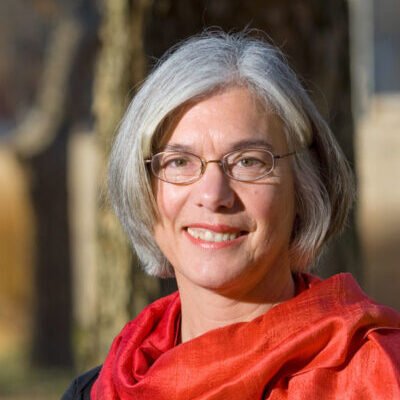
Dorothy Munkenbeck Fragaszy
University of Georgia
1. Participation in the School
2. Bio
Dorothy Munkenbeck Fragaszy, Professor Emerita of Psychology at the University of Georgia, is a comparative psychologist and primatologist. Her research, primarily with capuchin monkeys, addresses behavioral development, learning in social contexts, problem-solving, and manual skills. She is former Editor of the Journal of Comparative Psychology, past President of both the American Society of Primatologists and the International Primatological Society, a National Geographic Explorer, and Fellow of the American Association for the Advancement of Science and of the Association for Psychological Science. In her free time she likes to do hand crafts and jigsaw puzzles, and spend time in her garden, a forest and in or on the sea.
What do we know about capuchin monkeys using tools, and how do we know it?
Comparative psychologists study the behavior of animals of all species to understand their, and our, behavior from an evolutionary perspective.
The phenomenon of animals using objects as tools has been of longstanding interest to comparative psychologists, and it is enjoying a high level of attention now, as descriptions of animals of diverse species, from bees to puffins, using tools have proliferated. But scientific understanding of this phenomenon lags behind popular interest in it, starting with a definition. How should we define ” tool use”, or as I prefer to say, “tooling” (to highlight the action rather than the object)? What theories guide our scientific understanding of it, and what philosophies lie behind the theories? What questions have we asked, what methods have we used to answer them, and what have we learned? Capuchin monkeys (Sapajus and Cebus) using tools in nature and in captive settings provide a clear avenue to explore these questions.
I will describe my team’s research with capuchin monkeys using tools, how our approach as psychologists complements the approaches to this same topic by scientists in other fields, and how our understanding of tooling has been enriched by our collective work. This area of research is a good example of how science, as a way of knowing, is a dynamic process.
- animal behavior
- psychology
- evolution
- tool use
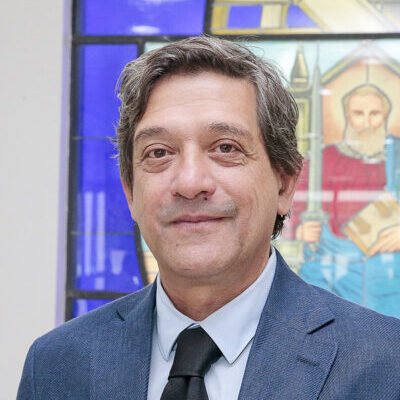
Eduardo Góes Neves
Museum of Archaeology and Ethmology of the University of São Paulo
1. Participation in the School
2. Bio
Eduardo Góes Neves holds a BA in History from the University of São Paulo and a PhD in Anthropology from Indiana University. He has over 30 years of research experience in the Amazon Basin and is currently Professor of Archaeology and Director of the Museum of Archaeology and Ethnology of the University of São Paulo. He has published widely on topics related to the Amazon and has written the books “Sob os Tempos do Equinócio: 8.000 anos de história na Amazônia Central”, “Arqueologia da Amazônia”, co-edited “Unknown Amazon: Culture in Nature in Ancient Brazil” and has recently organized the chapter on Amazonian archaeology for the UN-sponsored Science Panel of the Amazon. Former president of the Brazilian Archaeological Society, he was a visiting professor in Universities in Latin America, the US and Europe. His most important contribution has been the training of a host of archaeologists who are active in the Amazon today.
The social production of nature by indigenous peoples
Archaeological research conducted in recent decades in the Amazon has shown how the Indigenous peoples who have inhabited it for approximately 13,000 years have profoundly modified the region, so much so that it should be considered not only a natural heritage site but also a biocultural heritage site. In this lecture, I will present some elements that support this hypothesis and the implications for future protection policies.
- archeology
- Amazon region
- native peoples
- bioculture
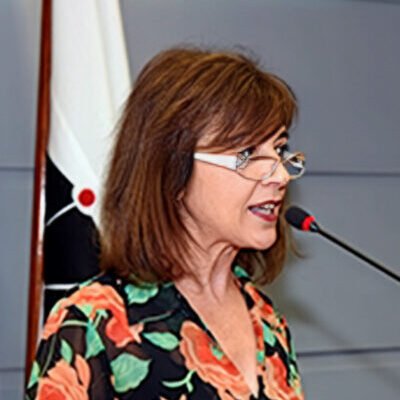
Emília Pietrafesa de Godoi
State University of Campinas (UNICAMP)
1. Participation in the School
2. Bio
Website of UNICAMP: https://portal.dados.unicamp.br/perfil
Emília Pietrafesa de Godoi is a full professor in the Department of Anthropology at the Institute of Philosophy and Human Sciences at Unicamp and a full professor in the Graduate Program in Social Anthropology at IFCH/Unicamp. She is a researcher at the CoLaboratório Terra-Território (CoLaTTe) at the Center for Rural Studies-CERES/IFCH/Unicamp. She holds a master's degree in Social Anthropology from Unicamp, a doctorate in the same field from the University of Paris-Nanterre, and a postdoctoral degree from the Centre d'Études Africaines at ÉHÉSS/Paris. Emília has extensive ethnographic experience in the semi-arid hinterland of northeastern Brazil and the eastern Amazon, working primarily on the following topics: rural and traditional populations, social memory, land, territorialities, and rights. Her publications include "The work of memory: Everyday Life and History in the Sertão of Piauí/ O trabalho da memória: Cotidiano e história no sertão Piauí" (Unicamp Publishing House), the co-authorship of two volumes of "Social History of the Peasantry in Brazil/ História Social do Campesinato no Brasil" (Unesp Publishing House), and her most recent book, "Becoming Quilombola in the land of the saint: The weaving of a composite world/ Devir Quilombola na terra de santo: A tecelagem de um mundo composto" (Papéis Selvagens Edições). She currently coordinates the Unicamp team on the project "Sociobiodiverse territories in Maranhão and Pará: Environment, knowledge, and sustainability" (Fapesp-Unicamp/Fapespa-UFOPA/Fapema-UFMA).
Traditional Agricultural Systems (SAT), as cultural and environmental heritage
Based on research I have been conducting in the Amazon region, in southwestern Pará, in communities in the municipality of Belterra and Planalto Santareno, in the municipality of Mojuí dos Campos, I argue that traditional agricultural systems (SAT), in addition to being agrobiodiverse, play a fundamental role in the production of landscapes and the creation and maintenance of sociobiodiversity.
The situations analyzed are paradigmatic of cumulative anthropogenic transformations in the landscape, as their agroextractive systems are widely implanted in the so-called “black lands” or “black lands of the Indians”, which point to a profound temporal dimension and are marked by vestiges of pre-colonial societies. In recognition of the importance of these systems, I mention here that IPHAN, the National Institute of Historical and Artistic Heritage, linked to the Ministry of Science, Technology, and Innovation, recognized the SAT of the indigenous populations of the Rio Negro, in the Amazon, and the Quilombola Communities of the Ribeira Valley, in São Paulo, as cultural heritage, understanding them as centralizing technical, ecological, cultural, and productive aspects.
These systems are dynamic forms of managing spaces inherited from the past, incorporating innovation, experimentation, and exchange. In the situations analyzed, it is also clear that SAT’s combat the threat that the expansion of predatory activities, notably soybean monoculture, which has accelerated in recent years, poses to the vital links between bodies and lands that constitute these systems.
- agriculture
- culture
- Amazon region
- heritage

Emmanuel de Almeida Burdmann
Associate Professor in the Discipline of Nephrology at the School of Medicine, University of São Paulo
1. Participation in the School
2. Bio
Website of USP: https://www3.fm.usp.br/fmusp/docente/emmanuel-de-almeida-burdmann
Emmanuel Burdmann holds a degree in Medicine from the University of São Paulo School of Medicine (1978), a PhD in Nephrology from the University of São Paulo School of Medicine (1989), and a postdoctoral degree from Oregon Health Sciences University (USA, 1991-1993). In 1996, he obtained the title of Full Professor in Nephrology from the University of São Paulo School of Medicine. He is currently an Associate Professor 3 (MS-5) of Nephrology at the University of São Paulo School of Medicine. He has experience in Medicine, with an emphasis on Nephrology, working primarily on the topics of acute renal failure and nephrotoxicity.
On writing effective grant proposals
In this workshop, we will discuss key issues to consider when submitting a research grant or research proposal to funding agencies to maximize your chances of success.
- research
- research grants
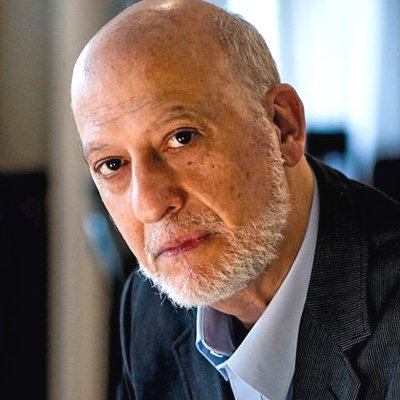
Esper A. Cavalheiro
Professor Emeritus at the Paulista School of Medicine/UNIFESP and Advisor to the Scientific Directorate of FAPESP
1. Participation in the School
2. Bio
Website of USP: https://unifesp.br/prodmais/profile.php
Esper Abrão Cavalheiro, MD, is Professor Emeritus in the Department of Neurology and Neurosurgery at the Paulista School of Medicine ofUniversidade Federal de São Paulo. He is a Full Member of the Brazilian Academy of Sciences, the International League Against Epilepsy, and the International Bureau of Epilepsy. He was President of the National Council of the Scientific and Technological Development (CNPq) and Secretary of Science and Technology Policies and Programs of the Ministry of Science and Technology-Brazil. He was President of the Forum of Pro-Rectors of Research and Graduate Studies, Coordinator of the Graduate Program in Neurology and Neuroscience at UNIFESP, and Vice-Rector of the Academy of Sciences of the State of São Paulo. He conducts neuroscience research focusing on the mechanisms underlying major neurological diseases, an area in which he has published over 500 articles in specialized journals, as well as book chapters and published books. He has supervised master's dissertations and doctoral theses in medicine and physiology. He has received awards and honors, including the Grand Cross of the Order of National Scientific Merit and the title of Commander of the Order of Rio Branco. He was an advisor to the Center for Management and Strategic Studies in Science, Technology, and Innovation, where he led strategic prospecting studies in several areas. From 2010 to 2015, he was President of the Scientific Council of the APAE Institute of São Paulo. In 2013, he assumed the position of Provost of Planning at UNIFESP, a position he held until April 2017. He was a member of the Board of Directors of CNPEM (National Council for Environmental and Social Development) and is a member of the Board of Trustees of the Péter Murányi Foundation. He assumed the position of Pro-Rector of Graduate Studies and Research at UNIFESP in May 2017. After his retirement from UNIFESP (September 2018), he served as a researcher at CNPEM (National Council for the Development of Graduate Studies) from November 2018 to March 2020. He coordinated the National Institute of Science and Technology in Translational Neuroscience (INNT), of which he is currently one of the principal investigators. He is Chair of the Committee for the Preparation of the National Graduate Plan (PNPG 2025-2029). Since 2024, he has served as an advisor to the Scientific Directorate of FAPESP.
Ethics and Integrity in Scientific Research: the risks of AI
The Ethics and Scientific Integrity Committees present at Brazilian Higher Education, Research, and Funding Institutions aim to ensure that all scientific activities carried out by their community are conducted responsibly, transparently, and in line with international ethical standards.
Their guidelines focus on (1) education; (2) prevention; (3) analysis of potential misconduct; and (4) suggesting the application of fair sanctions appropriate to the severity of each case. The recent introduction of AI has exerted ambivalent influences on scientific activity. While it allows for increased data processing capacity, the optimization of analytical methods, and the introduction of new directions in research, it can also produce questionable information, compromise reproducibility, and raise ethical dilemmas, especially when applied without due transparency.
Therefore, it is important to understand that the use of AI in scientific activities should not, under any circumstances, compromise the integrity and ethical responsibility of researchers.
- research
- AI
- ethics
- education

Gil Jardim
University of São Paulo
1. Participation in the School
2. Bio
Gil Jardim, an eminent musician, conductor, composer, and arranger, is distinguished by his remarkable versatility and creativity. He develops projects of the highest technical rigor and conceptual originality, harmonizing concert and popular music with the arts of dance, visual arts, literature, cinema, and contemporary media — always attuned to political, social, and artistic contexts.
His distinguished academic career at the University of São Paulo (USP) spans over three decades, during which he served as Director of the Department of Music at ECA, the Chamber Orchestra of USP (OCAM), and the University of São Paulo Symphony Orchestra (OSUSP). Jardim has also been the artistic mind behind prestigious international festivals and has collaborated with iconic artists such as Milton Nascimento, Gilberto Gil, Naná Vasconcelos, Egberto Gismonti, Leo Brouwer, and Branford Marsalis, among others. He has conducted renowned orchestras across the Americas and Europe.
Author of the book “The Anthropophagic Style of Heitor Villa-Lobos” and the acclaimed album “Villa-Lobos in Paris” — awarded the Bravo Magazine Culture Prize and the Diapason d’Or — Gil Jardim stands out as an influential and innovative figure in the contemporary musical landscape.
In 2019, the multimedia show VOOS DE VILLA premiered. It was a tremendous success with both audiences and critics. In 2024, it was restaged in an even bolder version with the Villa Brasil Ensemble—made up of 19 excellent musicians and one singer—and taken to several Brazilian capitals. Clarice Assad was the singer in 2024, and Luiza Lacerda in 2024.
Villa-Lobos: The architecture of Brazilian sound From the Atlantic Forest to the Concert Hall
In a 60-minute musical journey, conductor and researcher Gil Jardim invites the audience to dive into the life and work of Heitor Villa-Lobos, a central figure in shaping Brazil’s musical identity. The lecture reveals how Villa-Lobos masterfully blended popular tradition with classical sophistication, creating a unique language that resonates with the essence of Brazil.
- music
- Brazilian culture
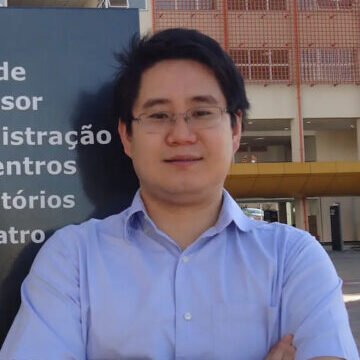
João Ricardo Sato
Federal University of ABC
1. Participation in the School
2. Bio
Website of UFABC: https://www.ufabc.edu.br/ensino/docentes/joao-ricardo-sato
João Ricardo Sato has been a professor at the Center for Mathematics, Computation, and Cognition at the Federal University of ABC since 2009, having passed a public selection process for the Department of Cognition. He currently holds the position of Associate Professor at the same institution. Between 2009 and 2015, he coordinated the Center for Cognition and Complex Systems (NCSC), a strategic unit directly linked to the UFABC Rector's Office, with the goal of fostering internationally renowned research and teaching activities in the areas of Neuroscience and Cognition. From 2018 to 2024, he served as coordinator of the Interdisciplinary Center for Applied Neuroscience (NINA) at UFABC, whose mission was to build bridges between Neuroscience and applied fields such as education, public policy, rehabilitation, and other direct interfaces with society. His current research focuses on the study of neurodevelopment and building dialogues between Neuroscience and Education, using neurotechnologies to foster connections with applied fields. His research is highly interdisciplinary, utilizing methodologies based on machine learning and neurotechnology to investigate issues in the areas of health and learning in education. He is currently the vice-coordinator of the Bachelor's Program in Neuroscience at UFABC
Interfaces between Arts, Neurosciences and Education: possible dialogues?
Interdisciplinarity allows us to combine approaches to better understand phenomena and processes and develop solutions. In this presentation, I intend to present Brazilian interdisciplinary studies conducted at the Federal University of ABC at the interfaces between Arts, Neuroscience, and Education. My main argument is that dialogues are not only possible, but indeed necessary. I will present the neurotechnology of functional near-infrared spectroscopy (fNIRS), whose flexibility makes it a relevant tool for both pedagogy and the arts. However, applications of this technique in research in these areas are still scarce, making it a potentially fruitful field for applied neuroscience. Furthermore, I will also present wearable EEG and eye-tracking neurotechnologies, which also play a fundamental role in research in these areas. The main motivations, results, interpretations, limitations, and challenges will be presented and discussed in this talk.
- neuroscience
- arts
- education
- interdisciplinarity

Marcia Thereza Couto
School of Medicine, University of São Paulo (FMUSP)
1. Participation in the School
2. Bio
Website of USP: https://www3.fm.usp.br/fmusp/docente/marcia-thereza-cavalcanti-couto
Marcia Thereza Couto is a Full Professor in the Department of Preventive Medicine and Chair of the Graduate Committee at the School of Medicine, University of São Paulo. She holds a Bachelor's degree in Social Sciences, a Master's in Anthropology, and a Ph.D. in Sociology from the Federal University of Pernambuco, as well as a postdoctoral degree in Public Health from the University of São Paulo. She is a Level 2 Researcher at the Brazilian National Research Council (CNPq), editor of journals in the field of Public Health, and coordinator of the CNPq research group SIMAS – Health, Intersectionality, and Social Markers of Difference. Her ›academic work integrates research on vaccines, vaccine hesitancy, HIV prevention, and health education, with a strong focus on qualitative methods and interdisciplinary approaches. She participates in national and international research networks, with recognized contributions in Brazil and abroad.
Vaccine hesitancy and contemporary challenges for public health
Vaccine hesitancy is a multifaceted phenomenon involving biomedical, sociocultural, political, and communicational dimensions. This lecture will discuss evidence from qualitative and mixed-methods studies conducted in Brazil and the Global South, exploring how distrust, structural inequalities, and competing narratives shape individual and collective decisions about whether or not to vaccinate.
Emphasis will be placed on the role of the social sciences in building contextually grounded analyses that go beyond explanations centered on individual non-adherence. Based on recent research, the presentation will offer pathways for developing immunization policies that are more sensitive to local realities and communication strategies that engage with diverse audiences, contributing to the rebuilding of trust in vaccines and the health system.
- public health
- vaccines
- education
- policies
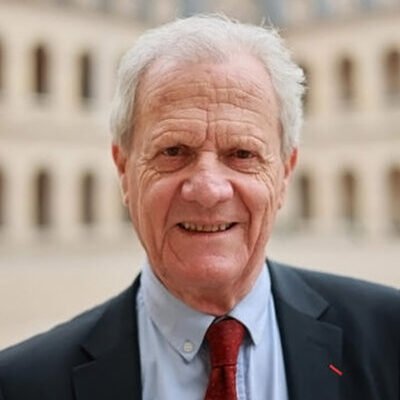
Robert Alain Frank
University of Paris 1 Panthéon-Sorbonne
1. Participation in the School
2. Bio
Robert Frank taught history and geography in high school from 1968 to 1977. From 1977 to 1990, he was Assistant Professor in Contemporary History in the University of Paris 10-Nanterre. In 1991, he became director of one of the research laboratories of the Centre National de la Recherche Scientifique (CNRS): the Institut d’Histoire du Temps Présent (IHTP). In 1994, he was elected as Professor at the Sorbonne (University of Paris 1 Panthéon-Sorbonne), taking up the chair of the History of International Relations. In parallel, in 2002, he founded the joint research unit SIRICE (Sorbonne-Identities, International Relations and Civilisations of Europe), a CNRS laboratory that he directed from 2002 to 2012. From 2010 to 2015, he was General Secretary of the ICHS (International Committee of Historical Sciences).
His areas of research were first financial, monetary and economic history; then, through the history of international finance, he came to the history of international relations, political and also cultural relations. In terms of studied periods, his work has focused on Interwar years, then on the Second World War – on which he is still working – and on the post-1945 period. He is also interested in more recent periods, in the framework not of “immediate history” but in that of a “history of the present time” that takes into account the long-time of the past to shed light on the present. His main research topics: the concepts of ‘power’, ‘decline’ and ‘international system’; the history of European integration; of Franco-British relations; the international and transnational circulations; the influence of representations, social imaginaries and collective emotions on international relations.
China, its place in international relations and its relationship with the world
China is now a great power, indeed a very great power, the second largest in the world. But is it a superpower, or even a hyperpower like the United States, its main rival at the top of the hierarchy? This question leads us to reflect on the concept of ‘power’, the concepts derived from it, and its components and manifestations in the case of China. China’s strengths are well known: it has the nuclear weapon since 1964 and a permanent seat on the UN Security Council since 1971; it embarked on an extraordinary economic transformation in 1979, enabling its economy to benefit from globalisation, surpassing that of Japan in 2010 and becoming the world’s second largest economy. How does China use this power? How does it wield hard and soft power? As a regional and Asian power, both continental and maritime, it has claims that generate tensions in the Taiwan Strait, around the Spratly and Paracel Islands. In any case, there is no real power without a certain will to power: the Chinese have the ambition to become a ‘global’ power, thanks to expansion in Africa, thanks to the ‘new silk roads’ towards Central Asia and Europe to the west, and towards Singapore to the south.
This position in international relations also depends on its standing vis-à-vis other major powers : the United States in the lead, but also Russia and the emerging BRICS powers. The question is: what are the goals of this deployment? To destabilise the American-dominated international order in order to change it, upset the current balance of power and establish a new dominance? Or to achieve a greater, more equitable balance within the world? There are Chinese ambivalences here that need to be studied closely.
All this new involvement in world affairs requires the development of an original ‘diplomatic machine’. Many aspects of Chinese diplomacy can only be understood by looking back at the past. The Chinese are steeped in their long history spanning several millennia, which they perceive as cyclical, with periods of unity and power alternating with periods of anarchy and decline. Their official belief is that they have succeeded in reaching a new peak thanks to Mao Zedong’s revolution in 1949 and Deng Xiaoping’s reforms in 1979. They are also attached to their ancient political philosophy, which dates back to the 6th and 5th centuries BCE with Confucius, Lao Tzu and Sun Tzu: it structures their relationship with others, their perception of strength and weakness, their vision of harmony and peace, and their conception of war. This ancient culture must therefore be taken into account, because their relationship with the ‘world’ in the philosophical sense helps to understand the place that the Chinese intend to occupy in the ‘world’ in the geopolitical sense of the term.
- geopolitics
- diplomacy
- history
- philosophy